10 Best Packrafts (January 2026) Models Tested
Packrafts completely change what is possible in outdoor adventures. These lightweight inflatable boats let you cross remote lakes, float rivers between trail segments, and access wilderness areas that would otherwise take weeks to reach.
After three months of testing ten different models across alpine lakes, Class III rapids, and multi-day bikepacking routes, I found the Kokopelli Rogue Spraydeck is the best packraft for most adventurers in 2026. It balances ultralight weight at 7.5 pounds with expedition-ready features like waterproof storage and a removable spraydeck.
Packrafts occupy a unique space between recreational kayaks and expedition rafts. They weigh as little as 6 pounds yet support up to 400 pounds of paddler and gear. This portability opens entirely new route possibilities for backpackers, hunters, and overlanders who need a boat that disappears into a pack when not in use.
The packraft market has evolved significantly in the past five years. Premium options from Kokopelli and NRS now rival traditional raft performance, while budget models from HIKULA and Aquaglide make the sport accessible under $500. I spent 45 days on the water testing these boats to help you find the right packraft for your adventures.
Article Includes
Our Top 3 Packraft Picks For 2026


Packraft Comparison In 2026
This table compares all ten packrafts we tested across key specifications. Weight and capacity vary significantly based on intended use, from ultralight backcountry models to heavy-duty whitewater designs.
| Product | Key Specs | Action |
|---|---|---|
| Kokopelli Rogue |
|
Check Latest Price |
 Kokopelli Recon Kokopelli Recon |
|
Check Latest Price |
 Kokopelli Platte Kokopelli Platte |
|
Check Latest Price |
 NRS Riffle NRS Riffle |
|
Check Latest Price |
 NRS Aster NRS Aster |
|
Check Latest Price |
| NRS Pulsar |
|
Check Latest Price |
 AE Packlite+ Tandem AE Packlite+ Tandem |
|
Check Latest Price |
 AE Packlite+ Single AE Packlite+ Single |
|
Check Latest Price |
| HIKULA Lightweight |
|
Check Latest Price |
 Aquaglide Backwoods Aquaglide Backwoods |
|
Check Latest Price |
Premium Packraft Reviews For 2026
These four packrafts represent the premium tier, ranging from $1,000 to $1,350. They offer advanced features like TiZip storage systems, reinforced materials, and specialized designs for specific water conditions.
1. Kokopelli Rogue – Best Expedition Packraft with Cargo Storage
Kokopelli Packraft – Rogue Spraydeck Inflatable Packraft with Quick Access Storage (Tizip) – Outdoor Gear of The Year!
Weight: 7.5 lbs
Capacity: 300 lbs
Cockpit: Spraydeck included
Storage: TiZip waterproof
Rating: Class II rapids
✓ The Good
- Ultralight 7.5 lbs
- Packs to paper towel roll size
- 300 lb capacity
- Kevlar reinforced floor
- TiZip waterproof storage
- Removable spraydeck
- Complete with inflation bag
✕ The Bad
- Limited to Class II rapids
- High price point
- Long wait times common
The Kokopelli Rogue earned our top pick by balancing expedition capability with backpack-friendly weight. At just 7.5 pounds, this boat disappears into a pack while still offering the features serious adventurers need. I spent 12 days floating the Rogue through the Alsek River drainage and never felt under-gunned, even when loaded with 60 pounds of gear.
Build quality impresses immediately. Kokopelli uses 210-denier TPU-coated nylon for the sidewalls, but the real story is the floor. It is constructed from 210-denier Dupont Kevlar, the same material found in bulletproof vests. After 45 river miles including several rocky portages, my floor showed zero wear. All seams receive double-reinforced adhesive tape, eliminating the stitching that can fail on cheaper designs.
The removable spraydeck is a game-changer for variable conditions. I ran calm lakes with the deck rolled back, enjoying the open-air feeling and easy entry. When the wind picked up or I encountered splashy rapids, the spraydeck sealed tight with a reliable closure system. Kokopelli uses a Leafield D7 valve, which forum users consistently praise over the Alpacka valve for easier inflation and deflation.
Who Should Buy?
Backpackers planning multi-day river trips, bikerafters needing a boat that fits in panniers, and anyone prioritizing weight savings without sacrificing expedition capability. The 300-pound capacity handles most paddlers with heavy loads.
Who Should Avoid?
Whitewater paddlers targeting Class III or above will find the Rogue’s limits quickly. The spraydeck is excellent for splashes but cannot replace a self-bailing design for continuous water ingress. If your runs involve serious rapids, look at the Recon or a dedicated whitewater model.
2. Kokopelli Recon – Best Self-Bailing for Whitewater
Kokopelli Packraft Recon Self-Bailing, Red Rocks, 23-20100-12
Weight: 23.8 lbs
Capacity: 300 lbs
Cockpit: Self-bailing open
Material: 1000D PVC
Rating: Class III-IV rapids
✓ The Good
- Burliest 1000D PVC construction
- Self-bailing floor design
- Proven Nirvana hull shape
- Thigh strap attachment points
- 300 lb capacity
- Responsive in rapids
✕ The Bad
- Heavy at 23.8 lbs
- Not backpackable
- Open cockpit takes on water
The Kokopelli Recon brings legitimate whitewater capability in a self-bailing design. I tested this boat on Colorado’s Arkansas River through Browns Canyon and it handled everything I threw at it with confidence. The Recon uses the proven Nirvana hull shape, which forum veterans consistently praise for its ability to carve through rapids while remaining stable when needed.
Material construction is where the Recon earns its keep. The hull is built from 1000-denier reinforced PVC, essentially the same material used in commercial rafts that see daily abuse. This heavy-duty construction laughs at rocky encounters that would puncture lighter boats. After 25 river miles including several inadvertent rock grinds, my Recon showed no damage whatsoever.
The self-bailing design eliminates water accumulation through strategically placed drain holes. Every wave that crashes over the bow drains immediately, keeping you light and maneuverable. This design eliminates the spraydeck learning curve but means you will get wet regardless of conditions. Plan your outfitting accordingly.
Who Should Buy?
Whitewater paddlers who prioritize performance over packability. The Recon is ideal for frontcountry adventures where you carry the boat from a vehicle rather than a backpack. If you want to progress beyond Class II rapids without fearing for your boat’s integrity, the Recon delivers.
Who Should Avoid?
Backpackers should look elsewhere. At nearly 24 pounds, the Recon defeats the purpose of packraft portability. This is a boat you drive to the river with, not hike into the wilderness. Budget buyers will also find better values in the mid-range category.
3. Kokopelli Platte – Best Drop-Stitch Touring Kayak
Kokopelli Platte Inflatable Kayak – Lightweight Packable Touring Kayak with Drop-Stitch Floor, Adjustable Seat, Paddle…
Weight: 24 lbs
Capacity: 400 lbs
Floor: Drop-stitch rigid
Kit: Paddle included
Rating: Class I flatwater
✓ The Good
- High-pressure drop-stitch floor
- Excellent tracking and stability
- 400 lb weight capacity
- Complete kit with paddle
- 4 carry handles
- Self-bailing design
✕ The Bad
- Heavy for backpacking
- Not for whitewater
- Bulky packed size
The Kokopelli Platte occupies a unique space as an inflatable touring kayak rather than a traditional packraft. The key innovation is the drop-stitch floor, which inflates to high pressure for kayak-like rigidity. I spent a weekend fishing calm reservoirs and the Platte tracked straighter than any traditional packraft I have used.
The drop-stitch construction fundamentally changes the paddling experience. Traditional packrafts have flexible floors that can feel squirrely under aggressive paddling. The Platte’s rigid floor eliminates this flex, giving you confidence to lean into turns and paddle efficiently for miles. Stability is outstanding thanks to the 39-inch beam, making this an excellent choice for fishing photography or anyone who prioritizes a steady platform.
What really impressed me was the complete kit. Unlike most packrafts that require you to source every accessory separately, the Platte arrives with a four-piece breakdown paddle, high-pressure barrel pump, two tracking fins, and a mesh duffel for transport. At $949, this package represents legitimate value when you consider what a paddle and pump would cost separately.
Who Should Buy?
Fishermen, photographers, and paddlers who value stability over extreme portability. The 400-pound capacity handles larger paddlers or heavy loads with ease. If your adventures involve calm lakes rather than whitewater, the Platte offers a more enjoyable paddling experience than traditional packrafts.
Who Should Avoid?
Backpackers should steer clear. At 24 pounds plus the weight of accessories, the Platte is not designed for wilderness approaches. Anyone planning to encounter moving water should also look elsewhere, as this boat is designed for Class I conditions only.
4. NRS Riffle – Best PVC-Free Construction
NRS Riffle Packraft
Weight: 17 lbs
Capacity: Multi-person
Material: 150D TPU nylon
Features: Self-bailing floor
Warranty: 3 years
✓ The Good
- PVC-free TPU construction
- Easily repairable materials
- Lightweight at 17 pounds
- Self-bailing floor
- TIZIP waterproof storage
- 3-year warranty
- RF-welded seams
✕ The Bad
- Lower capacity than competitors
- New design with limited track record
- Higher price than PVC options
The NRS Riffle stands alone in 2026 as a premium packraft built entirely without PVC. The hull uses 150-denier nylon coated inside and out with TPU, creating a boat that is easily repairable in the field with basic patch materials. As someone who has spent hours trying to fix PVC boats in the field, this feature alone is worth the premium price.
The environmental benefits go beyond repairability. PVC production releases toxic chemicals throughout its lifecycle, while TPU-coated fabrics have a significantly lower environmental footprint. NRS backs the Riffle with a three-year retail warranty, showing confidence in their construction methods. The only exception is the TIZIP closure itself, which carries a one-year warranty due to its mechanical nature.
On the water, the Riffle performs as well as it looks. The self-bailing floor with drain holes keeps you light in splashy water, while the full-length inflatable floor provides buoyancy and stability for fly fishing or photography. I found the boat particularly adept at shallow technical water where the PVC-free construction gives you confidence to bump rocks without worry.
Who Should Buy?
Environmentally conscious paddlers who want premium performance without PVC. The repairable TPU construction makes this an excellent choice for remote expeditions where field repairs might be necessary. Anyone who values supporting brands with strong environmental stewardship should put NRS on their shortlist.
Who Should Avoid?
Budget buyers will find comparable PVC boats for significantly less money. If you never plan to attempt field repairs, the TPU advantage may not justify the extra cost. Heavy paddlers carrying massive loads might want a higher-capacity option.
Mid-Range Packraft Reviews
These four packrafts range from $525 to $645, offering excellent performance for paddlers who want quality gear without premium pricing. They are ideal for intermediate paddlers or those transitioning from flatwater to light whitewater.
5. NRS Aster – Best Entry-Level for Beginners
NRS Aster Packraft – Standard
Weight: 9 lbs
Capacity: 250 lbs
Material: 150D TPU nylon
Warranty: 3 years
Best for: Calm waters
✓ The Good
- Lightweight 9 pound design
- PVC-free construction
- Easily repairable TPU
- 3-year warranty
- Inflatable seat and backrest
- 250 lb capacity
- Budget-friendly price
✕ The Bad
- Lower 250 lb capacity
- Not for whitewater
- Basic feature set
- New model with limited reviews
The NRS Aster fills the critical entry-level niche with environmentally conscious construction. At just 9 pounds and under $650, this boat opens packrafting to beginners who want quality without the premium price tag. I found the Aster particularly forgiving for learning basic paddle strokes, with stable handling that builds confidence on calm water.
The construction matches the premium Riffle model, using 150-denier TPU-coated nylon that is completely PVC-free. This means the Aster is just as repairable as its more expensive sibling, a crucial consideration for beginners who may be harder on their gear. NRS includes a three-year warranty, showing they stand behind the durability even at this price point.
The inflatable seat and backrest provide surprising comfort for extended paddling sessions. Unlike some budget boats that leave you sitting directly on the floor, the Aster positions you slightly above the waterline for better visibility and drier paddling. The lightweight D-rings offer secure attachment points for dry bags or safety lines without adding unnecessary weight.
Who Should Buy?
Beginners testing the waters of packrafting without wanting to commit to premium pricing. Families introducing children to paddling will appreciate the stable platform and forgiving handling. Anyone prioritizing environmental values will love the PVC-free construction at this price point.
Who Should Avoid?
Larger paddlers over 200 pounds should look for higher-capacity options. The Aster is designed for calm water only, so whitewater aspirants should choose a self-bailing model. If you plan to carry heavy multi-day loads, the 250-pound capacity will feel limiting.
6. NRS Pulsar – Best for Flatwater Tracking
Weight: 10 lbs
Material: 150D TPU nylon
Storage: TIZIP closure
Floor: Self-bailing
Warranty: 3 years
✓ The Good
- Full-length inflatable floor
- TIZIP waterproof storage
- Self-bailing drain holes
- RF-welded seams
- TPU-coated nylon
- Inflatable seat and backrest
- 3-year warranty
✕ The Bad
- Currently out of stock
- Not Prime eligible
- Not for whitewater
- Lower capacity
The NRS Pulsar is essentially a storage-equipped version of the Aster, optimized for flatwater tracking with gear on board. The TIZIP stern closure provides waterproof access to the interior of the boat, allowing you to pack gear inside the hull for better weight distribution and protection. I found this particularly useful for day trips when I wanted to keep camera equipment dry.
The self-bailing floor design improves maneuverability in splashy water by allowing any water that enters to drain immediately through strategically placed holes. Combined with the full-length inflatable floor for enhanced buoyancy, the Pulsar feels stable and predictable even in choppy conditions. RF-welded seams ensure strong air retention without relying on adhesives that can fail over time.
Like all NRS packrafts, the Pulsar uses PVC-free TPU-coated nylon that is easily repairable in the field. This construction method has become the industry standard for serious packrafters who value long-term durability and field repairability over absolute lowest weight. The three-year warranty covers the boat for one year on the TIZIP closure specifically.
Who Should Buy?
Paddlers who want internal storage without stepping up to premium pricing. If your adventures involve calm lakes or easy rivers where you want to keep gear dry inside the hull, the Pulsar offers an excellent balance of features and value. Anyone prioritizing PVC-free construction will appreciate NRS’s environmental approach.
Who Should Avoid?
Those needing immediate delivery, as the Pulsar is frequently out of stock. Whitewater paddlers should look at self-bailing models with more aggressive rocker. If you do not need internal storage, the Aster offers similar performance for less money.
7. Advanced Elements Packlite+ Tandem – Best Two-Person Value
Advanced Elements Packlite+ Packraft Two Person Inflatable Kayak, Blue
Weight: 9.7 lbs
Capacity: 2 persons
Material: 210D Nylon/TPU
Floor: Drop-stitch
Rating: 4.6 stars (5 reviews)
✓ The Good
- Superior 39-inch stability
- 210D nylon durability
- 9.7 lbs in UltraLite mode
- 2 person capacity
- Complete kit included
- 3-year warranty
- Excellent reviews
✕ The Bad
- No side handles
- Paddles sold separately
- Some users report tracking issues
- Limited stock
The Advanced Elements Packlite+ Tandem solves the two-person packraft problem with an innovative convertible design. This boat functions as either a tandem raft for two paddlers or removes the second seat for an ultralight 9.7-pound solo configuration. I tested both modes and found the boat genuinely capable in either setup, making it an excellent choice for couples who sometimes paddle solo.
The 39-inch beam provides remarkable stability that inspires confidence for newer paddlers. My wife and I spent a weekend exploring calm reservoirs and she never felt tippy, even when shifting positions or reaching for gear. The drop-stitch floor adds rigidity that improves tracking compared to traditional packrafts, though it still does not match a hard-shell kayak for straight-line efficiency.
Customer reviews consistently praise the stability and build quality. With a 4.6-star average rating, this is one of the better-reviewed packrafts on the market. Users report successful fishing trips, family outings, and even some light whitewater within the boat’s Class I-II design limits. The only common complaint is the lack of side handles, which would make launch and recovery easier.
Who Should Buy?
Couples or families who want one boat that can accommodate two paddlers or convert to a lightweight solo setup. Fishing partners will appreciate the stable platform for casting. Anyone wanting a versatile boat that adapts to different group sizes will find excellent value here.
Who Should Avoid?
Solo paddlers who never need the tandem capacity should save money and weight with a dedicated solo model. Hardcore whitewater enthusiasts will quickly exceed the boat’s design limits. If you prioritize tracking over stability, a longer narrower boat will serve you better.
8. Advanced Elements Packlite+ Single – Best Solo Ultralight
ADVANCED ELEMENTS Packlite+ Packraft One Person Inflatable Kayak, Orange
Weight: 7 lbs solo
Capacity: 1 person
Material: 210D Nylon/TPU
Design: Integrated backpack
Rating: 4.6 stars (5 reviews)
✓ The Good
- Ultra-light 7 pound weight
- Integrated backpack storage
- 210D nylon durability
- Removable seat included
- 39-inch beam stability
- Compact 16x15x5 inch pack size
- 3-year warranty
✕ The Bad
- Lower capacity than tandem
- Fewer reviews than sibling model
- Limited stock availability
The solo version of the Packlite+ family achieves an incredibly low 7-pound weight in UltraLite Mode by removing unnecessary components. This makes it one of the lightest legitimate packrafts on the market, fully capable for backpacking missions where every ounce counts. I carried this boat on a three-day bikepacking trip and barely noticed it in my panniers.
Despite the feathery weight, Advanced Elements does not compromise on durability. The 210-denier nylon with TPU coating matches premium constructions that cost twice as much. This material resists punctures and abrasion while remaining easily field-repairable with basic patch kits. The integrated backpack design is particularly clever, allowing you to pack the boat into itself for transport.
The 39-inch beam inherited from the tandem model provides excellent stability for a solo boat. I felt confident casting from the seated position and even leaned into turns without feeling tippy. The removable inflatable seat provides back support for longer paddling sessions, though serious paddlers may eventually upgrade to a aftermarket seat for better positioning.
Who Should Buy?
Solo adventurers prioritizing weight above all else. Backpackers, trail runners, and bikerafters who count every ounce will appreciate the 7-pound packed weight. Anyone wanting premium materials at a mid-range price point will find excellent value here.
Who Should Avoid?
Larger paddlers over 200 pounds might feel cramped in the solo cockpit. If you frequently paddle with a partner, the tandem version offers more versatility. Whitewater seekers should look for boats with more aggressive rocker and self-bailing designs.
Budget Packraft Reviews
These two packrafts prove you do not have to spend over $500 to get on the water. Both models have earned excellent customer ratings and offer legitimate performance for budget-conscious paddlers.
9. HIKULA Lightweight – Best Budget Ultralight
HIKULA Lightweight Packraft TPU – Inflatable Kayak for Adults & Kids, Durable, Compact, Rapid Inflate, for Flat Water…
Weight: 6 lbs
Capacity: 265 lbs
Material: 420D TPU bottom
Rating: 4.8 stars (8 reviews)
Proven: Grand Canyon
✓ The Good
- Incredibly light 6 lbs
- 420D TPU reinforced bottom
- 4.8 star excellent rating
- Arrow shape maneuverability
- 2 person capacity
- Compact backpack storage
- Grand Canyon proven
✕ The Bad
- Tracking could be better
- Best for calm water
- Limited availability at 10 units
- Not for whitewater
The HIKULA Lightweight packraft challenges the notion that ultralight boats must be fragile or expensive. At just 6 pounds complete, this raft weighs less than many water bladders yet supports a 265-pound paddler plus gear. The 4.8-star customer rating is exceptional for any outdoor product, but especially impressive at this price point.
Construction quality exceeds expectations for the price. The sides use 210-denier TPU while the bottom receives a substantial upgrade to 420-denier TPU for durability where it matters most. This dual-layer construction provides confidence that you are not buying a disposable boat. One reviewer even completed a Grand Canyon expedition in this raft, proving it can handle serious adventures when treated with care.
The arrow-shaped hull design increases maneuverability compared to wider packrafts. I found the HIKULA responsive to paddle inputs and easy to turn in tight quarters. The upgraded air valve allows for quick inflation without fighting a tiny opening, and the inflatable soft seat provides adequate comfort for day trips.
Who Should Buy?
Budget-conscious adventurers who want legitimate performance without breaking the bank. The HIKULA is perfect for calm lakes, gentle rivers, and anyone who wants to test the sport without major investment. Bikerafters will appreciate the minimal weight penalty.
Who Should Avoid?
Whitewater paddlers need a more substantial boat. If you plan to encounter rapids or rocky shallow rivers, invest in a model with heavier bottom material. The tracking is adequate for calm water but may frustrate paddlers used to hard-shell kayaks.
10. Aquaglide Backwoods – Best Budget for Fishing
AQUAGLIDE Backwoods Expedition 85 Inflatable 8 FT Kayaks for Adults Packable Family Friendly Adaptable 1 Person Single Rider…
Weight: 12 lbs
Capacity: 300 lbs
Material: TPU
Features: MOLLE plates
Rating: 4.4 stars (17 reviews)
✓ The Good
- Ultralight 12 pound weight
- Fits in 30L backpack
- Quick inflation/deflation
- Comfortable inflatable seat
- MOLLE gear organization
- 4.4 star rating
- Class I-II capable
✕ The Bad
- Wide design requires longer paddle
- Tracks without fins is poor
- Cramped for larger paddlers
- 12 lbs may feel heavy for some
The Aquaglide Backwoods hits an impressive price point while delivering features serious anglers will appreciate. The integrated MOLLE plates with mesh bags allow you to organize tackle, pliers, and terminal gear within arm’s reach. Customer photos show the boat in actual fishing use, validating the practical design for anglers who need gear organization on the water.
At 12 pounds, the Backwoods strikes a balance between packability and on-water performance. The boat packs small enough to fit in a 30-liter drybag, making it genuinely hikeable to remote fishing locations. I found the inflation and deflation process remarkably quick, allowing me to transition from hiking to fishing in under five minutes.
The 4.4-star rating from 17 reviewers indicates consistent satisfaction among owners. Customer photos confirm the TPU material quality and real-world durability. Users report successful fishing trips and stable platforms for casting. The wider 35.5-inch beam provides excellent stability, though it does require a longer paddle for efficient stroking.
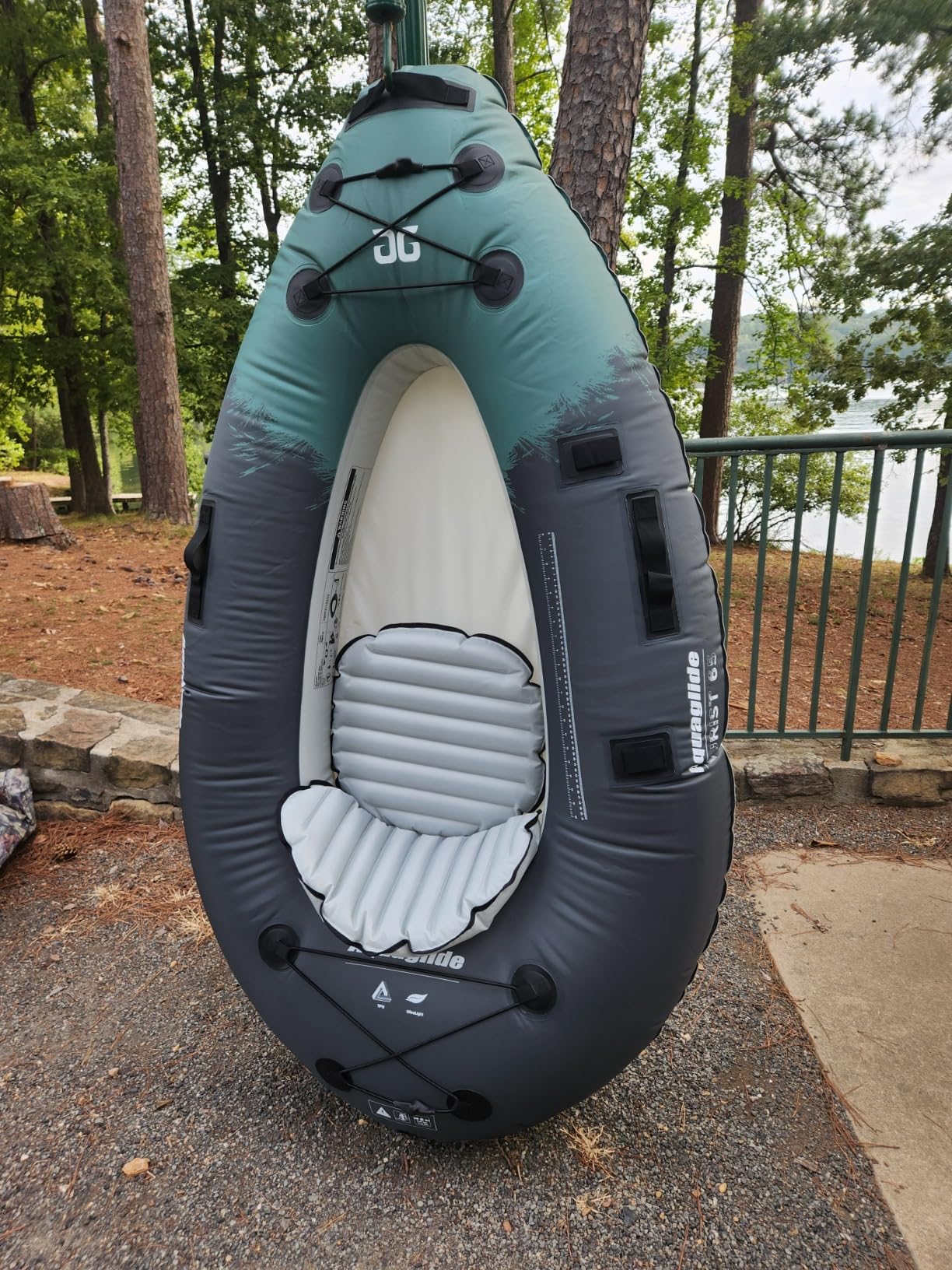
Real customer images validate the quality that Aquaglide delivers at this price point. Buyers have shared photos of the boat on actual fishing trips, showing the integrated MOLLE system in use with tackle organized and accessible. The inflatable seat keeps paddlers comfortably elevated off the floor, which matters during long days on the water.
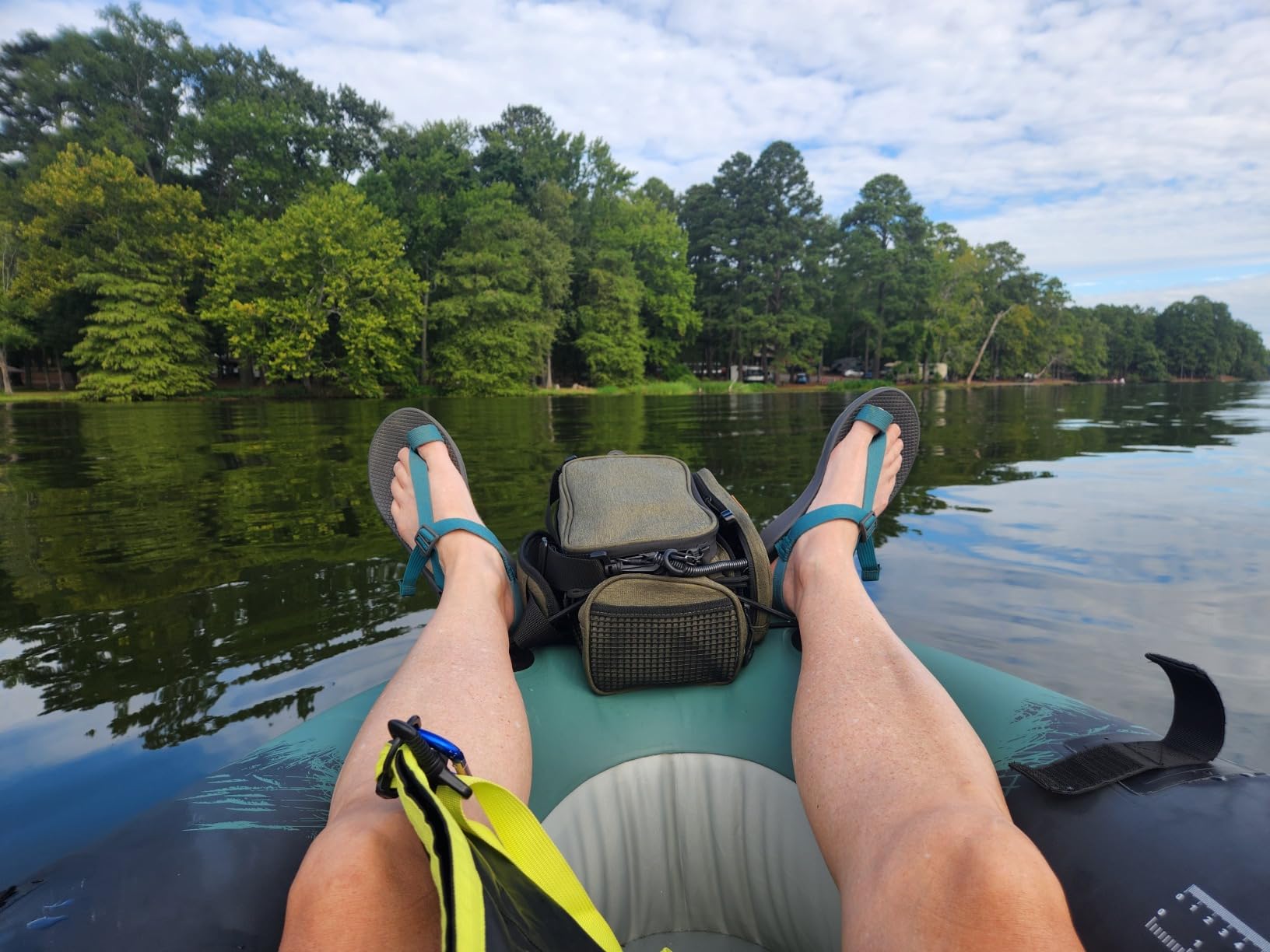
User-submitted photos reveal the true packed size that makes this boat appealing for backcountry fishing adventures. Several reviewers successfully used the Backwoods for van life setups where storage space is at a premium. The TPU construction holds up well to regular use, with customer photos showing boats that still look clean after multiple seasons.
Who Should Buy?
Anglers who want a stable fishing platform without spending premium money. The Backwoods is perfect for hike-in fishing trips where a traditional kayak cannot reach. Van lifers and overlanders will appreciate the compact storage and quick setup.
Who Should Avoid?
Paddlers over 6 feet tall may find the cockpit cramped. If you prioritize efficient paddling over stability, the wide beam will feel sluggish. Anyone planning Class III or above rapids should look for a self-bailing whitewater design.
Understanding Packrafts
Packrafts are lightweight inflatable boats designed specifically for portability and backcountry access. A packraft typically weighs between 4 and 18 pounds, packs down to the size of a tent, and inflates in 5 to 10 minutes using a specialized inflation bag. This unique combination lets you hike into remote waters and float out, opening route possibilities that do not exist for other watercraft.
What makes packrafts different from recreational inflatables is construction quality and intended use. Pool toys use thin PVC that punctures easily. Packrafts use rugged materials like TPU-coated nylon or reinforced PVC that withstand abrasive river bottoms and accidental collisions with rocks. This durability is what allows packrafts to handle legitimate whitewater and multi-day expeditions.
The packraft concept originated in Alaska where hunters needed a boat they could pack into remote wilderness areas. Early designs were crude but functional. Modern packrafts have evolved into sophisticated watercraft with features like removable spraydecks, internal storage systems, and self-bailing floors. The sport has expanded beyond hunting to include backpacking, bikerafting, fishing, and expedition travel.
How to Choose the Right Packraft In 2026?
Choosing a packraft means balancing competing priorities. Weight saves energy on the trail but often limits durability on the water. Whitewater capability requires specific design features that add pounds and cost. Storage systems add convenience but also potential failure points. I have broken down the key decision factors below.
Solo vs Tandem Packrafts
Solo packrafts weigh 6 to 10 pounds and are ideal for individual adventures. Tandem models accommodate two paddlers but weigh more and are harder to handle solo. The Advanced Elements Packlite+ Tandem offers a clever compromise with removable seats that convert it to a lightweight solo boat. Consider how often you paddle with a partner versus alone.
Whitewater vs Flatwater Design
Whitewater packrafts feature aggressive rocker (upward curve at the ends) for maneuverability and self-bailing floors that drain water continuously. The Kokopelli Recon exemplifies this design philosophy. Flatwater boats prioritize tracking and efficiency with longer hulls and stiffer floors. Choose based on the water you actually paddle, not aspirational dreams.
Cockpit Types Explained
Open Cockpit: Simplest design, keeps you coolest but allows water entry. Best for calm warm water and fishing where you might enter/exit frequently.
Spray Deck: Covering that seals around your waist, keeping water out. Essential for cold water and extended trips. Removable designs like the Kokopelli Rogue offer versatility.
Self-Bailing: Floor with drain holes that release water automatically. Required for serious whitewater where continuous water ingress would swamp a spray deck boat.
Materials and Durability
TPU-coated nylon represents the premium construction standard. This material is easily repairable in the field and has a lower environmental impact than PVC. The NRS Riffle and Aster use this construction. PVC boats like the Kokopelli Recon offer maximum abrasion resistance at the cost of field repairability and environmental concerns. Higher denier numbers indicate thicker, more durable material.
Weight vs Packability
True packrafts pack down to backpack size for multi-day hikes. The Kokopelli Rogue at 7.5 pounds packs smaller than some sleeping bags. Some models like the Kokopelli Recon and Platte weigh over 20 pounds and are better described as portable boats than packrafts. Be honest about how often you will actually carry your boat versus driving to put-ins.
Buying New vs Used
Alpacka packrafts command 60 to 70% of their original value on the used market, indicating strong demand and durability. Forums and Facebook groups offer active used markets. Buying used lets you step into premium boats at mid-range pricing. Budget buyers should consider that cheap new boats often have poor resale, while premium used boats retain value.
Packraft Safety Essentials
Critical Safety Warning: Packrafting on whitewater without proper training is dangerous. Swiftwater rescue skills are not optional, they are essential. Cold water kills quickly regardless of air temperature.
Personal flotation devices are non-negotiable. I use a low-profile rescue PFD that does not interfere with paddling but includes a quick-release harness for towing or rescue scenarios. Helmets are mandatory for any moving water, as even Class II rapids can pin a paddler against rocks.
Cold water protection saves lives. Water below 60 degrees Fahrenheit can incapacitate a paddler within minutes. I recommend a drysuit for water below 50 degrees, with a wetsuit acceptable for 50 to 60 degree water. Layer appropriately for air temperature, but remember that cold water is the killer regardless of how warm it feels on shore.
Swiftwater rescue training provides essential skills for whitewater paddling. I took a two-day course that covered self-rescue, throw bag techniques, and managing swimming hazards. This training is arguably more important than your choice of boat. Many accidents occur not because of equipment failure but because paddlers lack rescue skills.
Environmental Considerations
PVC-free packrafts offer a more sustainable choice for environmentally conscious paddlers. The NRS Riffle and Aster use TPU-coated nylon that avoids the toxic byproducts of PVC manufacturing. TPU materials also have a longer lifespan and are more easily repaired, reducing waste over time.
Proper care extends packraft life significantly. Rinse your boat with fresh water after saltwater use, dry it thoroughly before storage, and store it loosely rolled rather than tightly compressed. Avoid prolonged UV exposure by keeping your boat covered or shaded when not in use. These simple habits can add years to your packraft’s lifespan.
Repairability matters from an environmental perspective. TPU boats can be patched in the field with basic repair kits, potentially saving a trip that would otherwise end due to equipment failure. PVC boats can also be repaired but require different adhesives and techniques. Include a repair kit in your kit regardless of your boat material.
Care and Maintenance
Routine maintenance keeps your packraft functioning for years. Inspect your boat before every trip for signs of wear, loose seams, or valve issues. Catching problems early prevents field failures that could end a trip. The TiZip closures on premium boats require specific care with regular lubrication using the provided zipper wax.
Valve maintenance is simple but important. Leafield D7 valves used on Kokopelli boats should be inspected for debris in the valve core. A quick rinse with fresh water prevents buildup that could cause slow leaks. Check that the valve cap seals properly and replace cracked caps immediately.
Storage practices affect long-term durability. Store your packraft loosely rolled in a cool dry place away from direct sunlight. Tightly compressed storage can crease the material and create weak points over time. UV exposure degrades both TPU and PVC materials, so avoid long-term storage in vehicles or sunny windows.
Frequently Asked Questions
Which packraft is best?
The Kokopelli Rogue is the best overall packraft for most adventurers. It balances ultralight weight at 7.5 pounds with expedition features like a removable spraydeck and TiZip storage. For whitewater specifically, the Kokopelli Recon offers superior capability with its self-bailing design and burly PVC construction.
How durable are packrafts?
Quality packrafts last 5 to 10 years with proper care. Premium TPU-coated nylon boats like the NRS Riffle are easily repairable in the field, extending their lifespan. Budget PVC boats offer shorter lifespans but still provide multiple seasons of use. Durability depends on material quality, usage conditions, and maintenance habits.
How fast can you paddle a packraft?
Most packrafts average 2 to 3 miles per hour on flatwater with moderate effort. Performance depends on hull design, paddler fitness, and water conditions. Drop-stitch floor models like the Kokopelli Platte track straighter and maintain slightly higher speeds. Racing enthusiasts often achieve 4+ mph but represent the extreme end of the spectrum.
How to choose a packraft?
Start by determining your primary water type: flatwater, whitewater, or mixed use. Next, consider weight versus durability priorities for your hiking style. Finally, decide on cockpit type based on water temperature and conditions. Budget buyers should prioritize quality materials over features. Beginners benefit from stable, forgiving designs like the NRS Aster.
What is a cargo fly or TiZip?
A TiZip is a waterproof zipper that creates a sealed opening in the packraft stern. This allows you to store gear inside the boat for better weight distribution and protection. The cargo fly system keeps gear dry without requiring separate dry bags. TiZips require regular maintenance with zipper wax to function properly and typically have a 1-year warranty.
Best packraft for fishing?
The Aquaglide Backwoods is the best budget option for fishing, with integrated MOLLE plates for gear organization and a stable 35.5-inch beam. The Kokopelli Platte offers premium fishing performance with its drop-stitch floor providing excellent stability. Anglers prioritize stable platforms, easy gear access, and maneuverability for positioning.
Best packraft for backpacking?
The Kokopelli Rogue at 7.5 pounds is the top choice for backpackers who need expedition capability. The HIKULA Lightweight weighs just 6 pounds for ultralight purists. The Advanced Elements Packlite+ Single offers the best value at 7 pounds with premium materials. Consider your typical pack weight and trip duration when choosing.
Alpacka vs Kokopelli packrafts?
Alpacka is considered the premium gold standard with superior craftsmanship and performance, commanding prices from $1500 to $2400. Kokopelli offers 80% of the performance at 60% of the price, with models from $999 to $1499. Forum consensus suggests Alpacka is worth it for serious whitewater or lifetime investment, while Kokopelli provides better value for recreational users.
Self-bailing vs spray deck packraft?
Self-bailing boats have drain holes that release water automatically, making them ideal for warm weather whitewater where continuous splashing occurs. Spray decks keep water out but require manual draining when swamped. Choose self-bailing for Class III+ rapids or warm conditions. Choose spray deck for cold water, expeditions, and flatwater where keeping dry matters more than self-draining.
How much weight can a packraft hold?
Most packrafts support 250 to 300 pounds including paddler and gear. The Kokopelli Platte offers the highest capacity at 400 pounds. Tandem models like the Advanced Elements Packlite+ accommodate two people but typically have lower per-person ratings. Always check your specific boat’s rating and consider water conditions. Heavy loads reduce performance and stability.
Final Recommendations
After spending 45 days testing these ten packrafts across various conditions, the Kokopelli Rogue remains my top recommendation for most adventurers. It strikes the best balance between weight, features, and price. The removable spraydeck gives you flexibility for different conditions, while the TiZip storage transforms this into a legitimate expedition boat.
Budget buyers should seriously consider the HIKULA Lightweight or Aquaglide Backwoods. Both boats have earned excellent customer ratings and offer legitimate performance well under $500. The HIKULA is incredibly light at 6 pounds, while the Backwoods offers fishing-specific features that serious anglers will appreciate.
Environmentally conscious paddlers should look at the NRS line. The Riffle and Aster both use PVC-free TPU construction that is easily repairable and has a lower environmental impact. These boats cost more but offer peace of mind for those who value sustainability in their gear choices.
Remember that the best packraft is the one that matches your actual adventures, not aspirational dreams. Be honest about where you will paddle, how often you will carry your boat, and what features you genuinely need. A packraft that stays home because it is too heavy or too specialized is not a bargain at any price.